Twenty teams.One week.A shot at Nvidia.Ours made the cut.
IQVIA challenged every business unit to define how they'd leverage a new partnership with Nvidia. Our team at IQVIA Digital answered with the beginnings of a platform-wide AI assistant — and moved from concept to delivery in months.
Context & Challenge
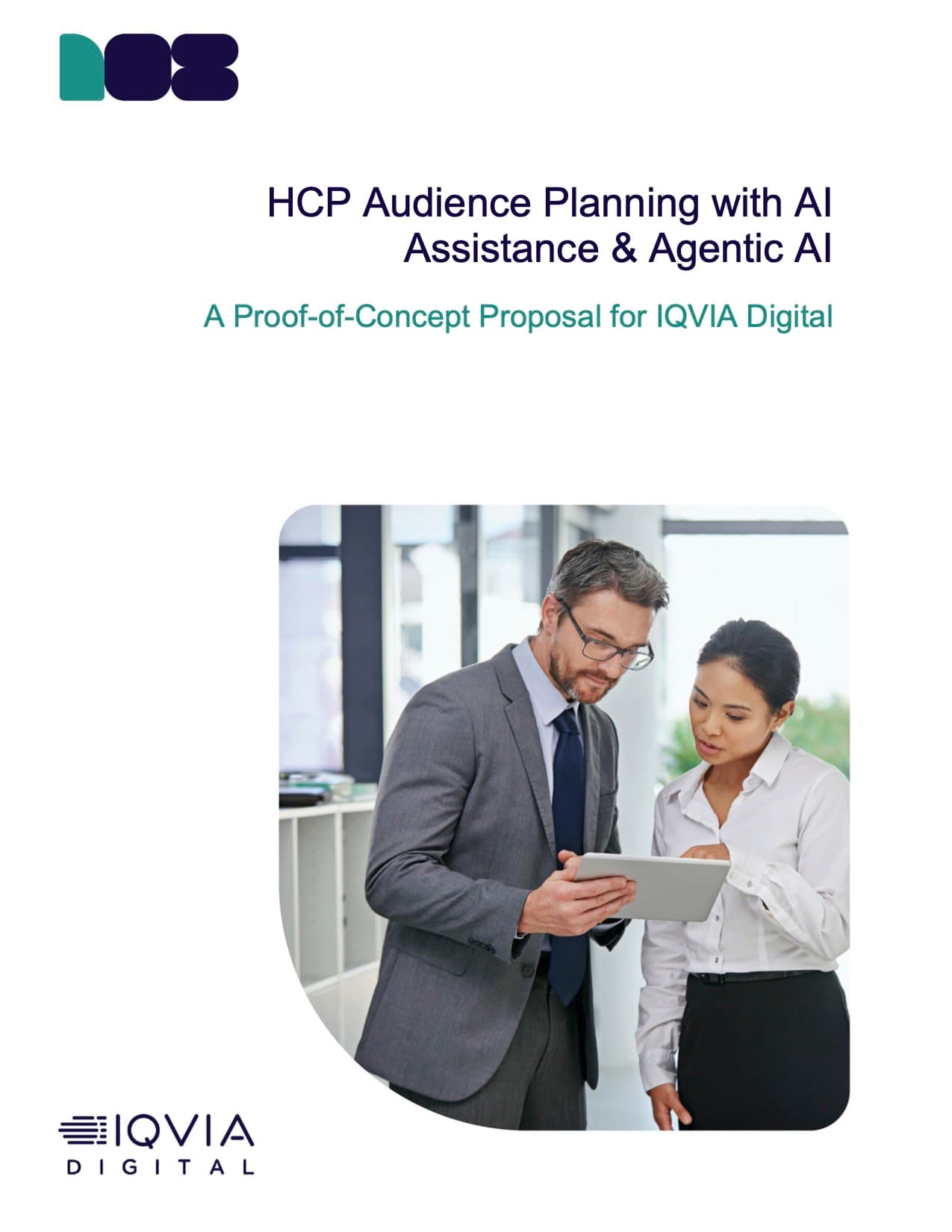
Media OS is IQVIA Digital's unified healthcare marketing platform — built for pharma companies, agencies, and publishers planning and activating omnichannel campaigns across HCP and consumer audiences. It consolidates what once required multiple vendors: audience planning, activation, and real-time measurement, all in one place. The data inside it is extraordinary. What was missing was a way to make it not feel like homework.
Users were doing what anyone does when software doesn't help them think — reverting to Excel, building activation strategies outside the platform, and peppering the data team with questions it shouldn't have to field. Media OS was exceptional at delivering data. It just wasn't helping anyone understand what to do with it.
The Design Challenge
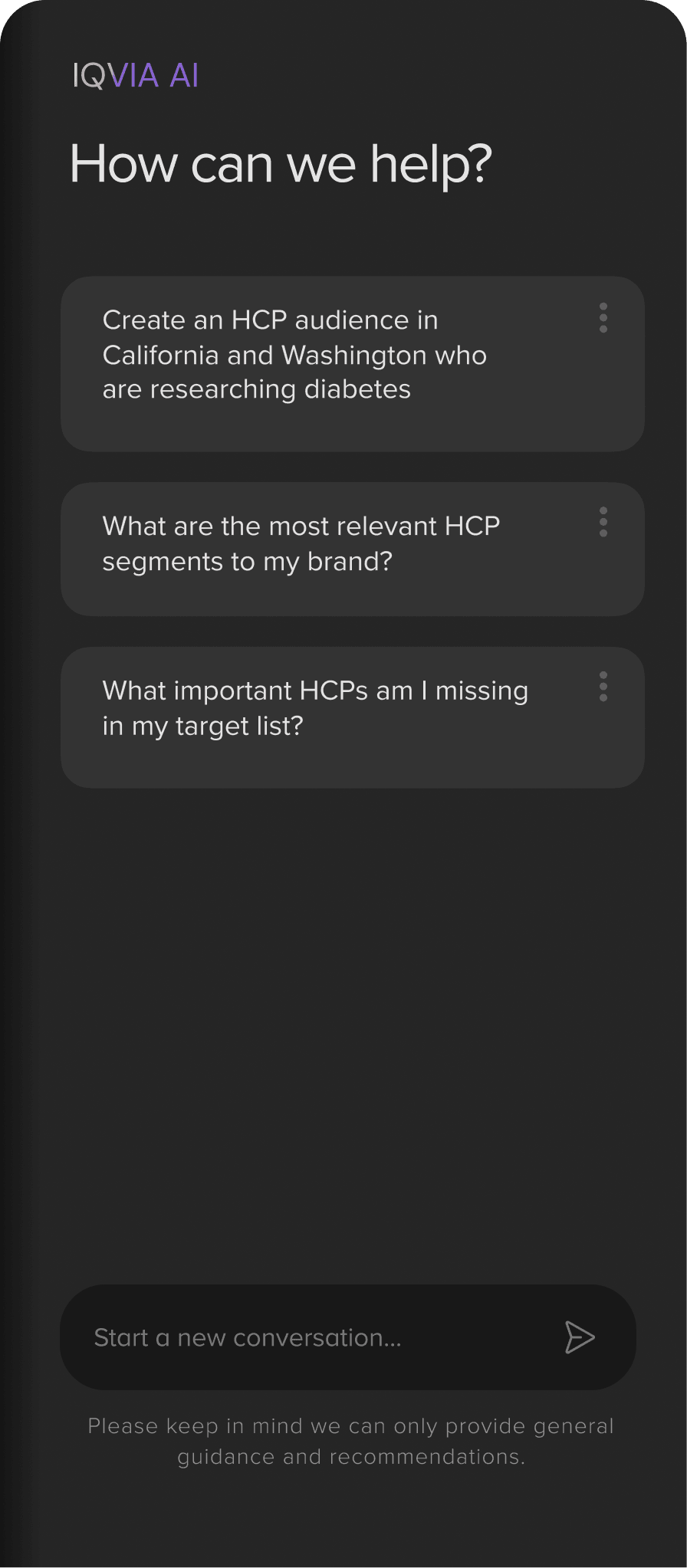
Design a platform-wide AI assistant — in a single week — that could translate the complexity of Media OS data into clear guidance, recommended actions, and smarter decisions. The work needed to be compelling enough to win a competitive internal proposal, with a Nvidia partnership and executive attention on the line.
Twenty teams pitched.
Five days to design.
One shot at Nvidia.
MyRole&Approach
I owned the end-to-end design implementation for a 5-day sprint. Working from a direction my lead had begun to shape, I built a rapid component library rooted in our recent platform rebrand — giving us the speed to explore freely without starting from zero.
Phase 1
Discovery
PoC proposal + focus groups
Phase 2
Design
Rebrand foundation, custom components
Phase 3
Feedback
Storyboards + scripted scenarios
Phase 4
Prototype
Ozempic & Asthma demos
Post-Pitch
MVP
Nvidia-led development
TheWork
Discovery
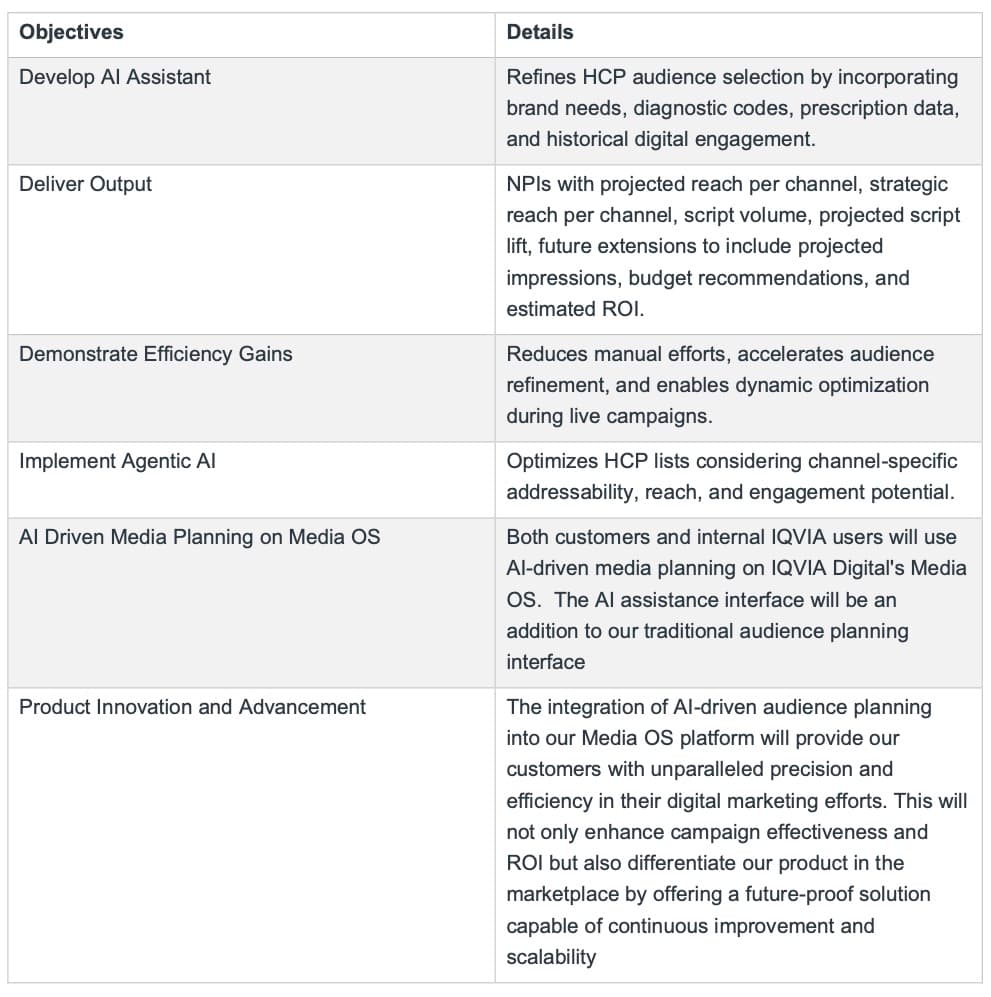
Discovery was intentionally lean — the timeline demanded it. Our primary guide was the PoC proposal document, supplemented by multiple stakeholder focus groups throughout the sprint.
The AI needed to lead conversations proactively — surfacing suggestions before the user had to ask.
The existing design system needed a lighter, faster counterpart built for rapid exploration.
The assistant had to work across multiple entry points and user contexts — not a single fixed flow.
PoC Proposal
Focus Group Syntheses
Rebrand Inventory
Scrappy Design System
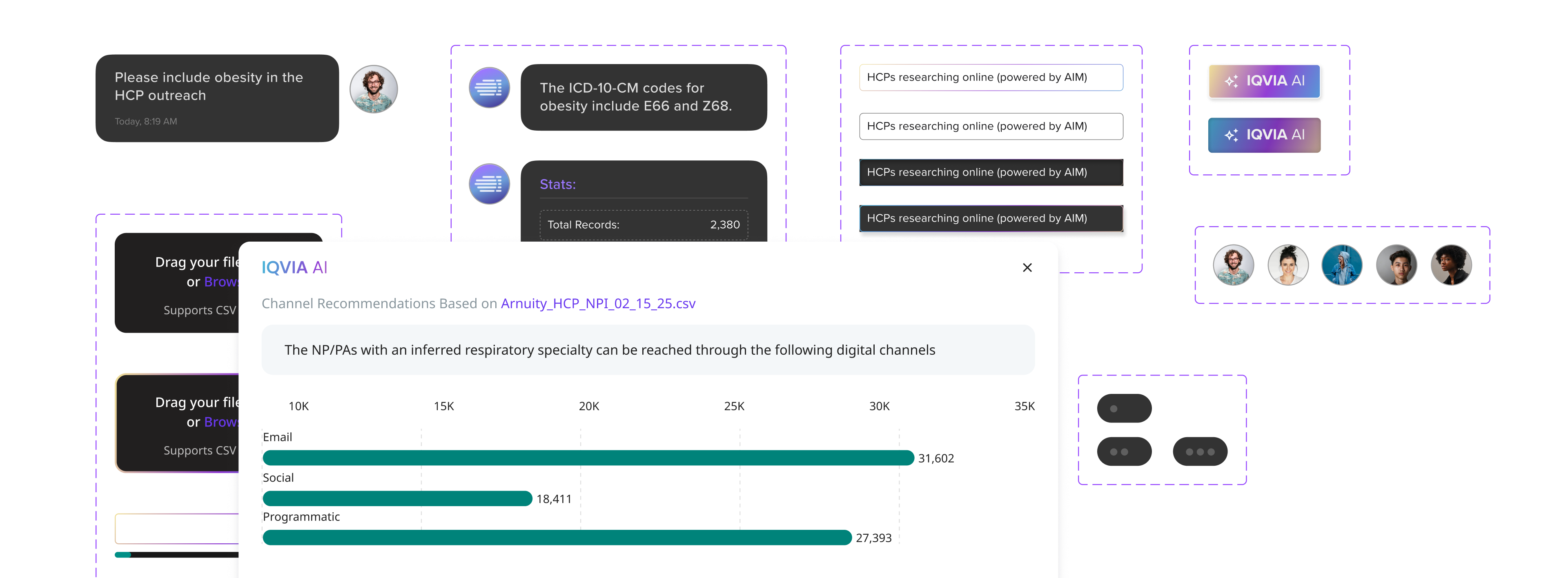
Before exploration could move at sprint speed, the system had to. The main Media OS design system was built for governance — stable, thorough, the right tool for shipping production. It wasn't the right tool for five days of proving a concept.
Working from the recent platform rebrand, I built a lightweight, localized component library — same visual DNA, stripped of the governance overhead. The AI panel states, suggested-prompt chips, and scripted data scenarios were built here first, letting the team explore without waiting for system approvals.
Duct tape with intent — built for the sprint, structured enough to feed learnings back into the platform library once the PoC became an MVP.
Four concepts entered.
Two survived.
The rejects sharpened everything.

Exploration
Exploration ran parallel to scripting — early concepts were deliberately held loose until the data scenarios were real enough to design around. Four prototypes were in play at once; focus groups cut two that were covering similar territory, landing us on Ozempic and Asthma as the strongest demonstrations of distinct use cases.
Key Design Decisions
Chosen
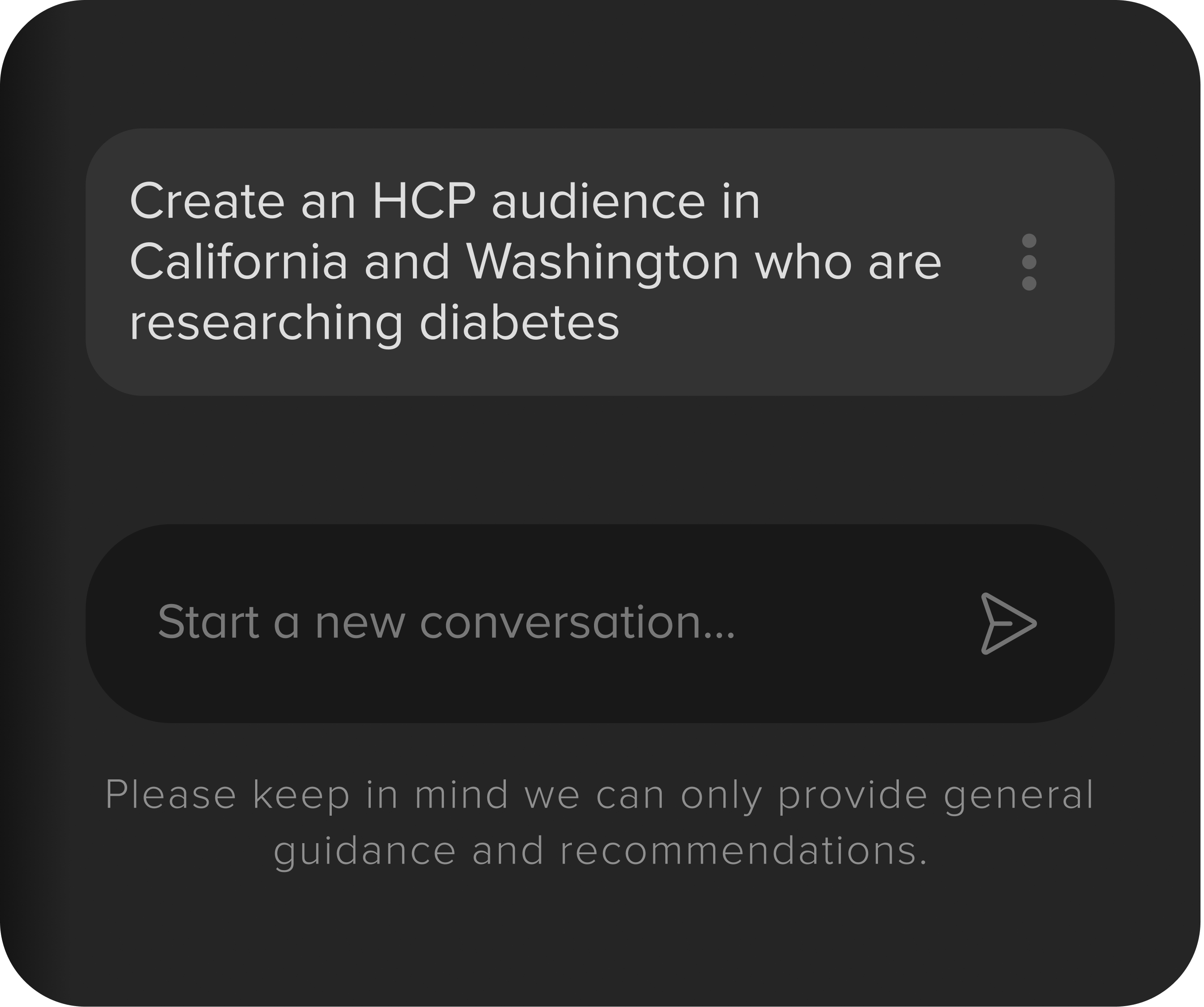
Proactive AI that surfaces conditional prompts, context clues, and suggested actions based on where the user is and what they likely need next.
Rejected
Traditional chatbot. Clean, open input field. User drives every interaction. Simple to build, hard to use well.
The call: Designing the AI to lead set the tone for everything that followed — not just in this prototype, but in how IQVIA Digital began thinking about AI patterns platform-wide. The goal was never a smarter search bar. It was a co-pilot.

Chosen
Move fast, connect the pieces that need to connect, accept rough edges where they don't show. Keep the data real, keep the vision clear, keep it visually credible.
Rejected
Slow down, close gaps properly, present fewer but more polished screens. Risk: running out of time before the story is told.
The call: The realism of the scripted data scenarios carried more weight than pixel-perfect polish. Leadership and Nvidia could see what it could become — which was exactly the point of a proof of concept.
Final Designs
Prototype — Ozempic
01 / 02
Videos have no sound
The most extensive and well-thought-out presentation we were able to see.
The combination of data, resources, and design prototype made moving forward a solid choice.
Outcome&Impact
1 of 20+
Selected out of the largest cross-company AI proposal competition in IQVIA's Nvidia partnership launch.
Built by Nvidia
Our prototype became a standalone AI application — capable of reading IQVIA data and delivering summaries, suggestions, and user-specific recommendations.
Back in our hands
The MVP returned to the design team and became the blueprint for AI across Media OS — starting with the Audience module before scaling platform-wide.
What started as a five-day sprint became the blueprint for how IQVIA Digital approaches AI — and quietly established a new role for me: the designer leadership calls when the timeline is impossible and the stakes are high.
Limitless capability means nothing without a person worth building it for.
— Reflection